System Improvements Have Resulted in
Water Quality Improvements ……
The Spencer Wastewater Treatment System underwent a comprehensive modernization to comply with the renewed National Pollutant Discharge Elimination System (NPDES) permit issued by the U.S. Environmental Protection Agency (EPA) in 2019.
In the years leading up to the issuance of the permit, QQLA worked with the EPA to encourage improvements to the Spencer wastewater system, including legal action under the Clean Water Act. Following the renewed permit, the Town of Spencer completed major upgrades to the Spencer Wastewater Treatment Plant (SWWTP) and invested in significant repairs and ongoing improvements to the wastewater collection system. Modernization of the treatment plant was completed in mid-2025, and continued improvements to the collection system have resulted in substantially improved system performance.
System performance is monitored through the EPA’s ECHO (Enforcement and Compliance History Online) database, which reports discharge from the SWWTP into the Seven Mile River. Of particular importance to the downstream recreational lakes—North Pond and South Pond—are phosphorus and nitrogen, two nutrients that can contribute to excessive algae growth. Since completion of the treatment plant upgrades, reported phosphorus discharges have consistently met or exceeded the performance standards established under the current NPDES permit.
QQLA recognizes the significant efforts of the Town of Spencer, plant operators, engineers, regulators, and others whose work has contributed to these improvements. This represents an important milestone in protecting water quality throughout the watershed.
At the same time, wastewater treatment is only one part of the overall picture. Nutrient inputs also originate from a variety of other sources throughout the Quaboag watershed, including private septic systems, agricultural activities, fertilizer use, and stormwater runoff. Continued collaboration among municipalities, property owners, organizations, and watershed stakeholders will be essential to further improve and protect the long-term health of our lakes and streams.
Spencer Wasterwater Treatment Plant
Water Quality Improvements
Over the years the QQLA has worked to implore the Spencer Waste Water Treatment Plant (SWWTP) to improve its inflow and infiltration (I&I) which has likely decreased the nutrient contribution flowing into North Pond and the surrounding watershed.
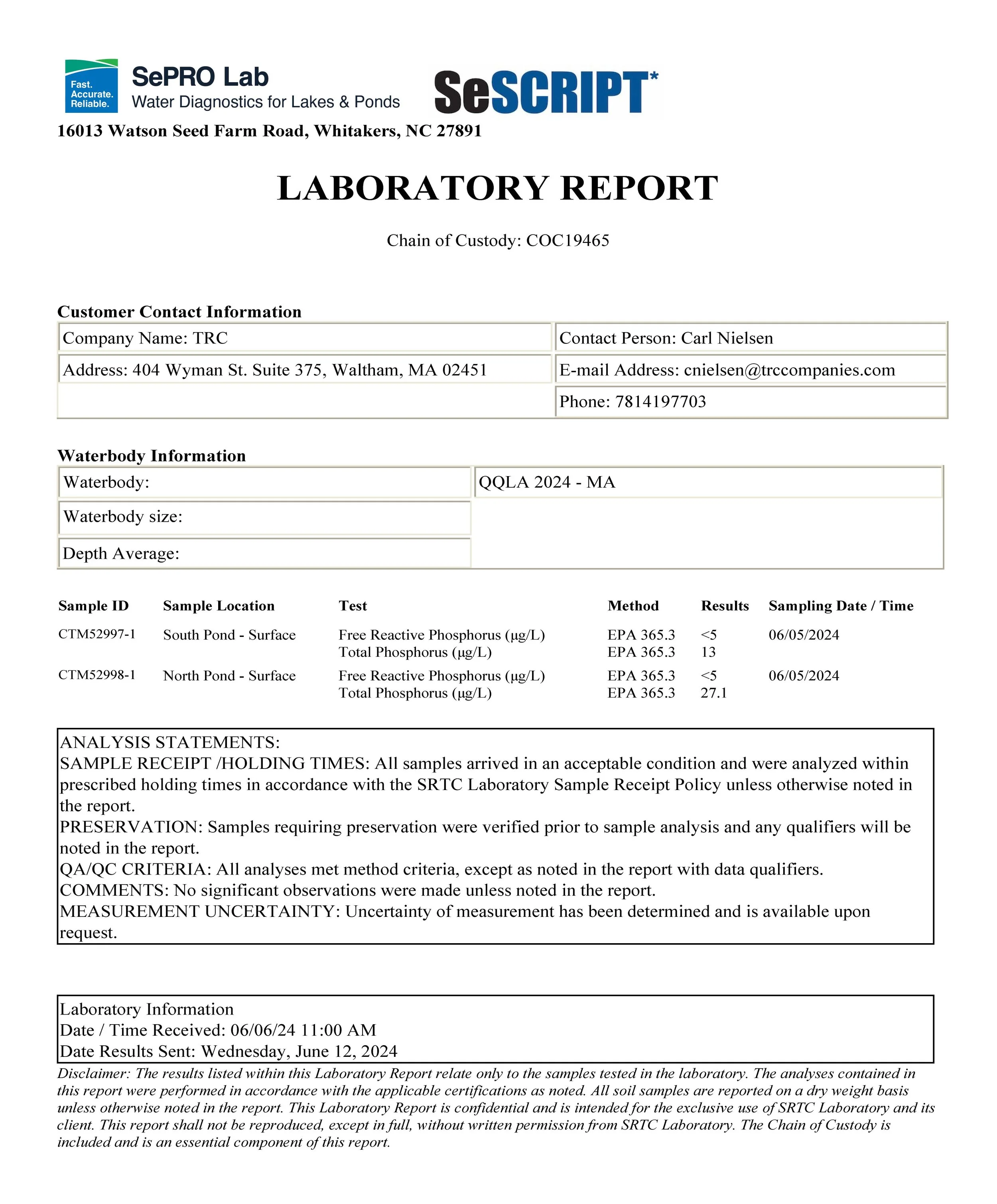
The phosphorus levels in North Pond have reduced from 0.044mg/L in 2007 to 0.0271mg/L in 2024. (Link to lab report below). The fact is that North Pond (7-mile River) has immensely improved, reflecting all the good practices that have been implemented in the upper watershed.
Good water quality keeps algae at bay. Focus on what enters the pond, like fertilizers and runoff. Add native plants along the shore and monitor water movement. Proper circulation boosts oxygen, aiding bacteria to break down organic material. Regularly check oxygen, nutrient levels, and pH to catch changes early.