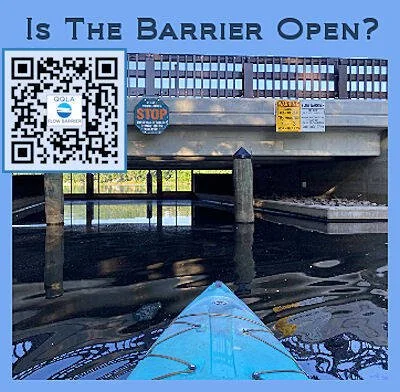
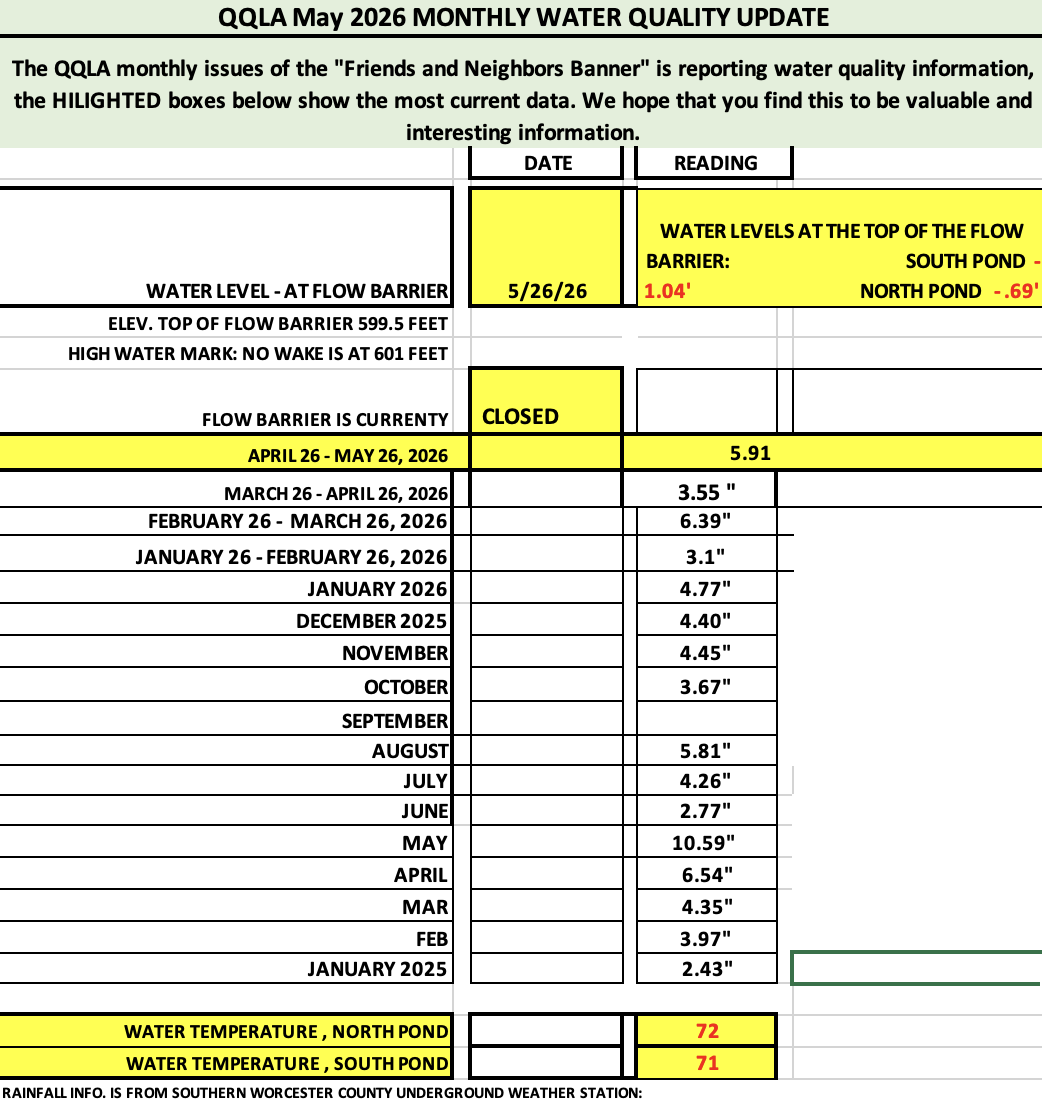
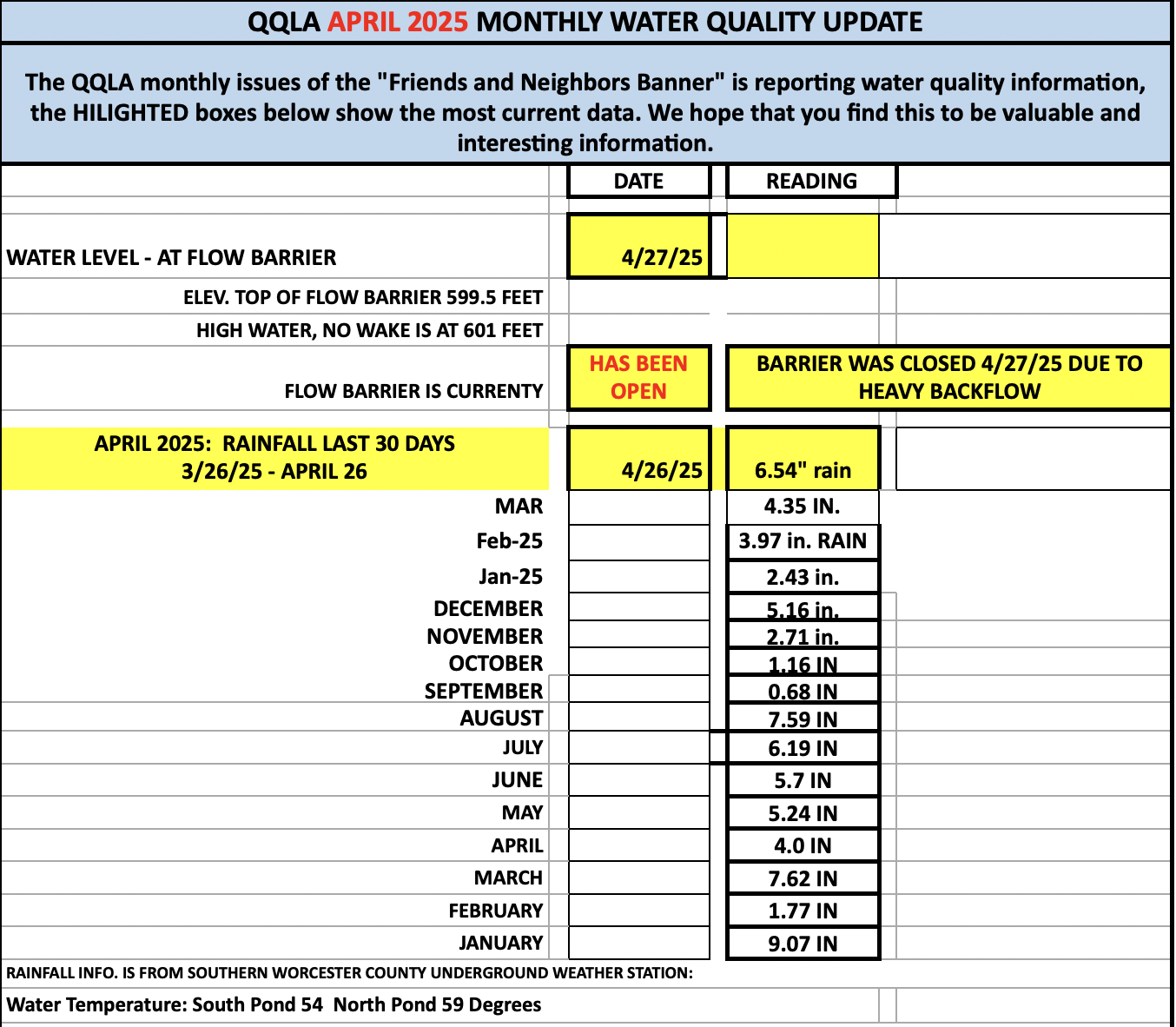
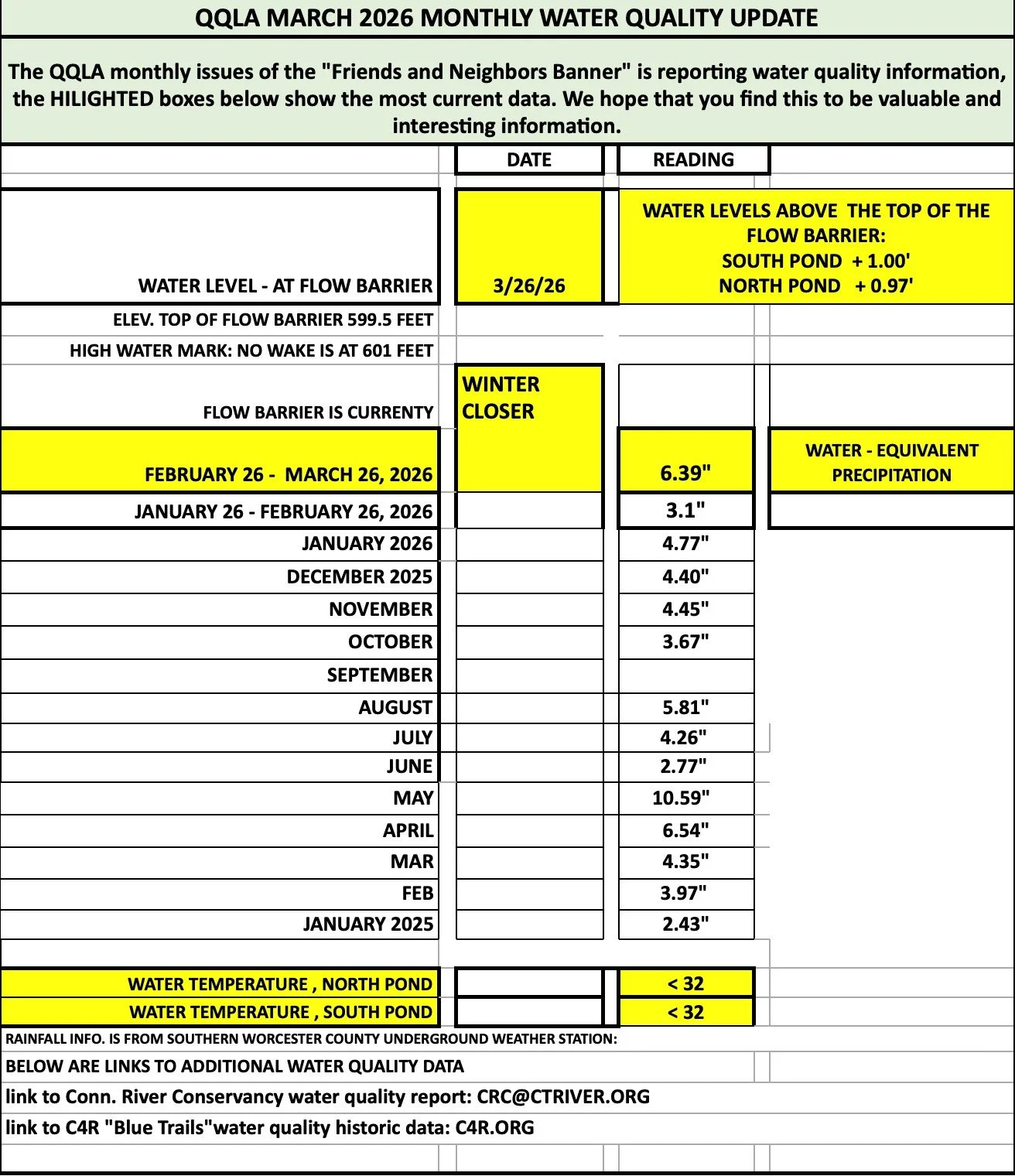
June 2026 Water Conditions

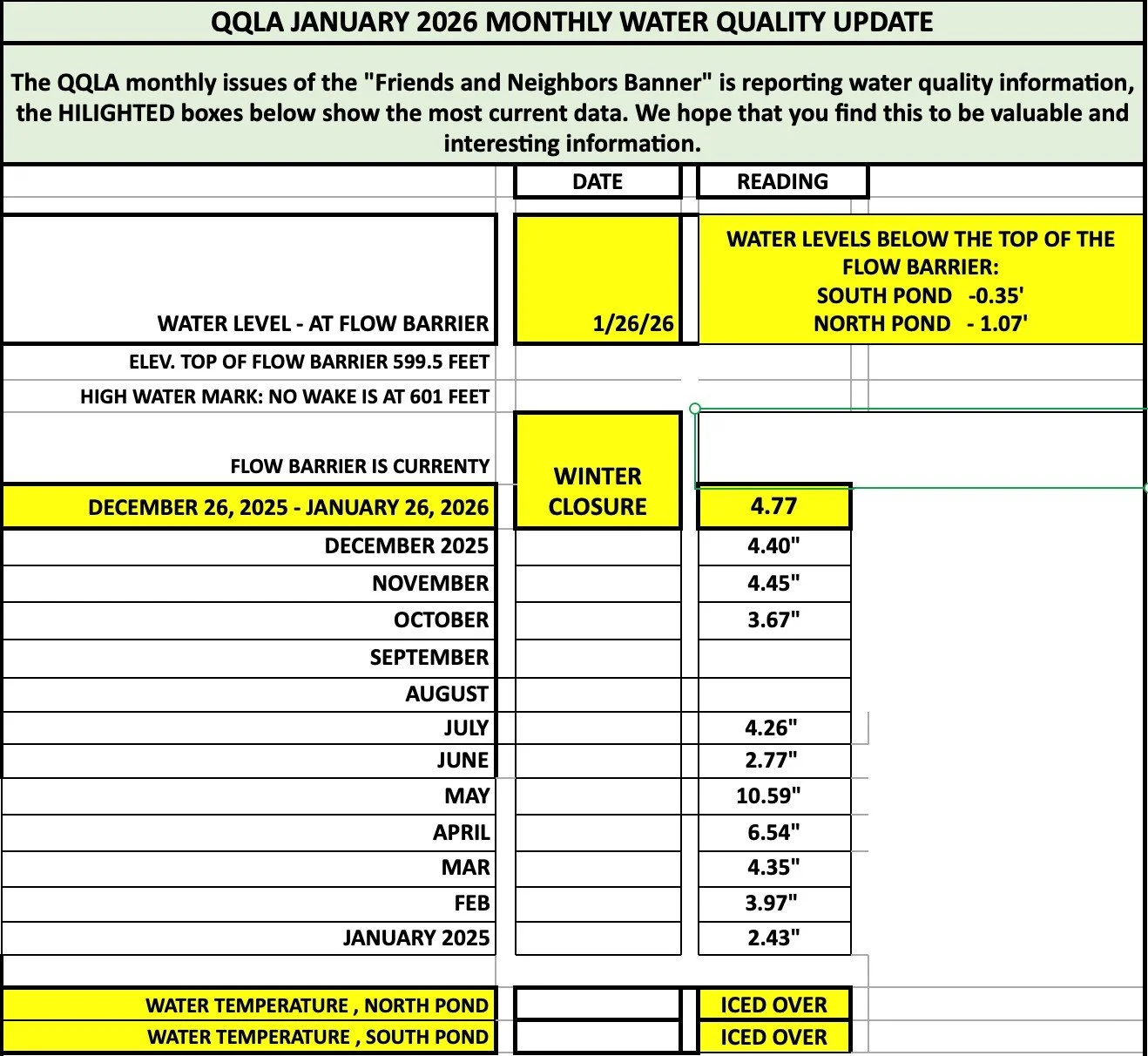
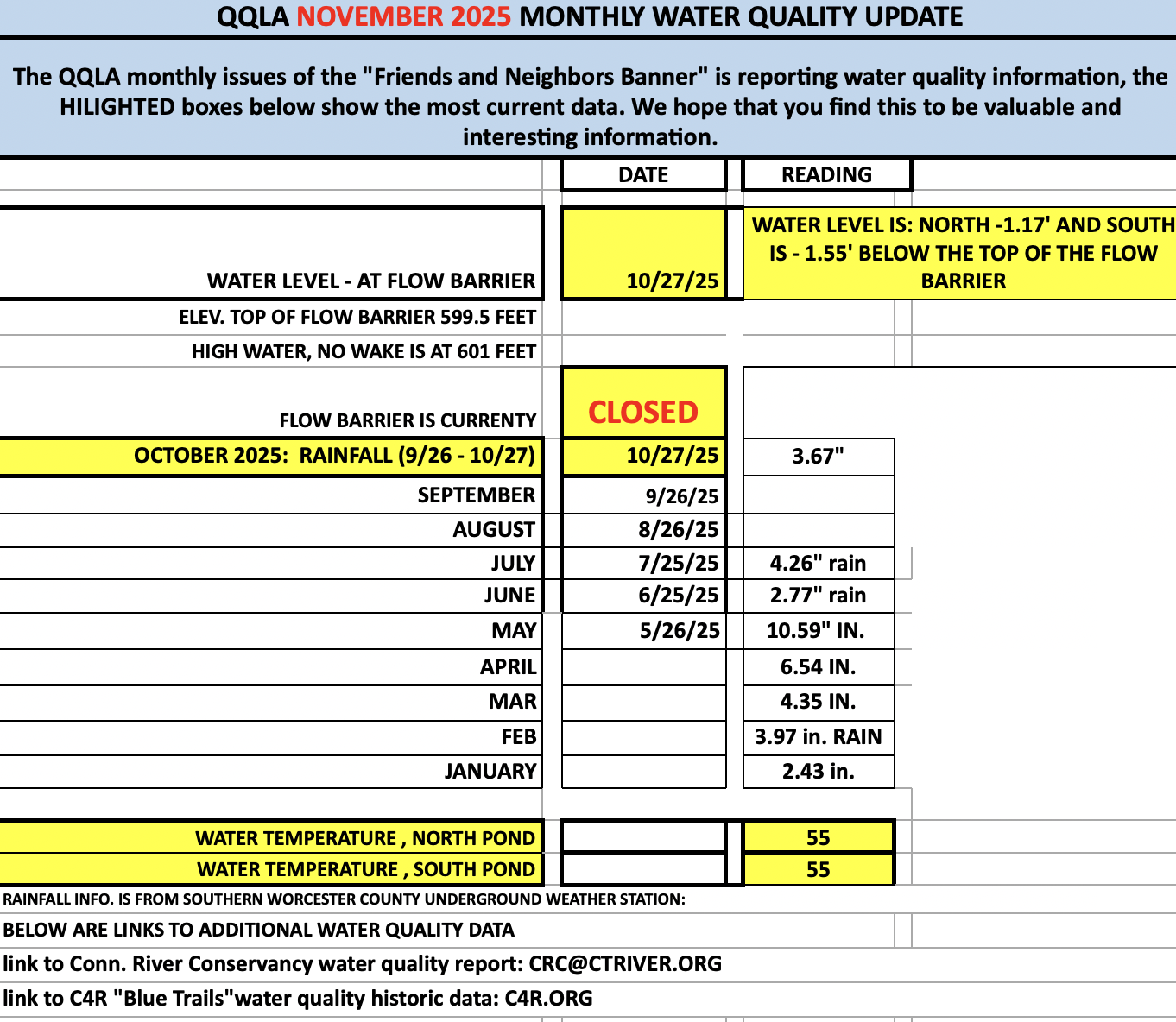
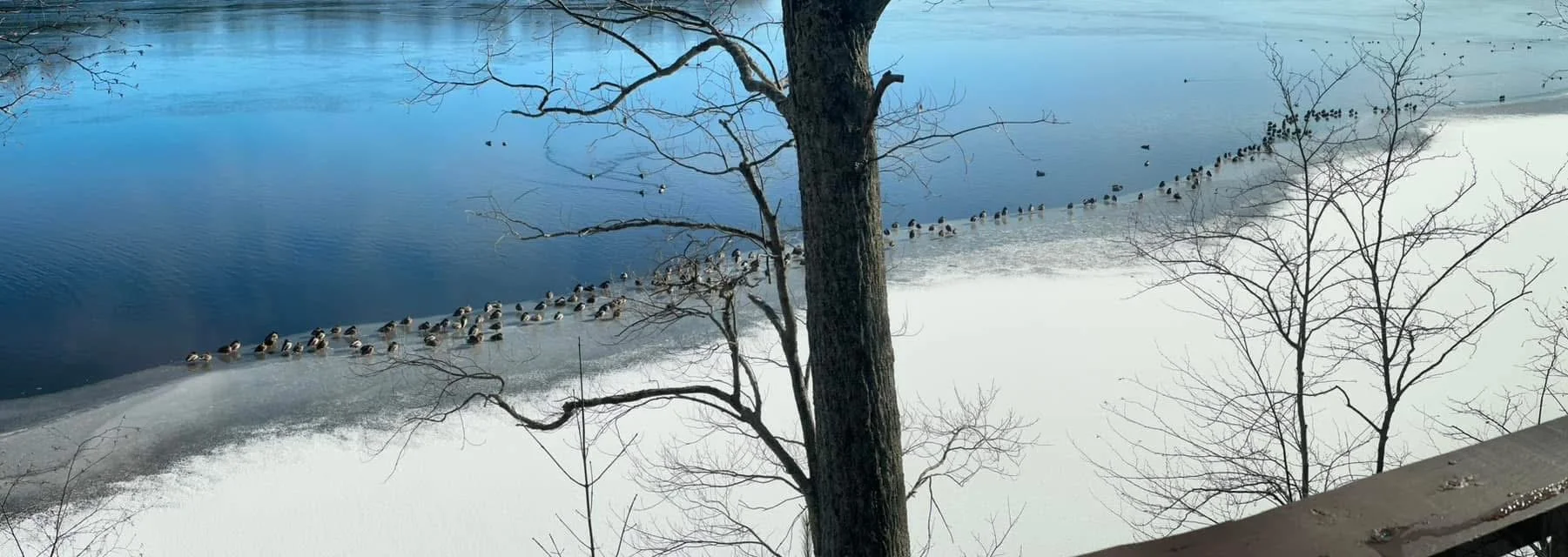
Living on our beautiful Lakes is not just for summer fun. The winter and our frozen lakes are an added bonus. Enjoy it safely! Whether you are fishing, snow shoeing, cross country skiing or just hiking, it’s another way to enjoy “lake life”.
Each year, New England residents enjoy boating, fishing, ice skating, and ice fishing, but many are injured from exposure to cold water. Skaters and ice fishermen fall through the ice and boaters/kayakers capsize. Unleashed pets run onto ice and people chase them. Learn safety tips about cold water exposure.
Ice Safety
Ice and Cold Water Safety
Always wear a personal flotation device (PFD) when boating.
Dress properly for cold weather in wool, which insulates better from the effects of hypothermia when dry or wet than man-made materials. Keep your head covered because 50% of body heat is lost through the head.
The only safe ice is at a skating rink. Ice on moving water in rivers, streams and brooks is never safe. The thickness of ice on ponds and lakes depends upon water currents or springs, depth and natural objects. Changes in temperature cause ice to expand and contract, which affects its strength. Because of these factors, ice cannot ever really be called safe.
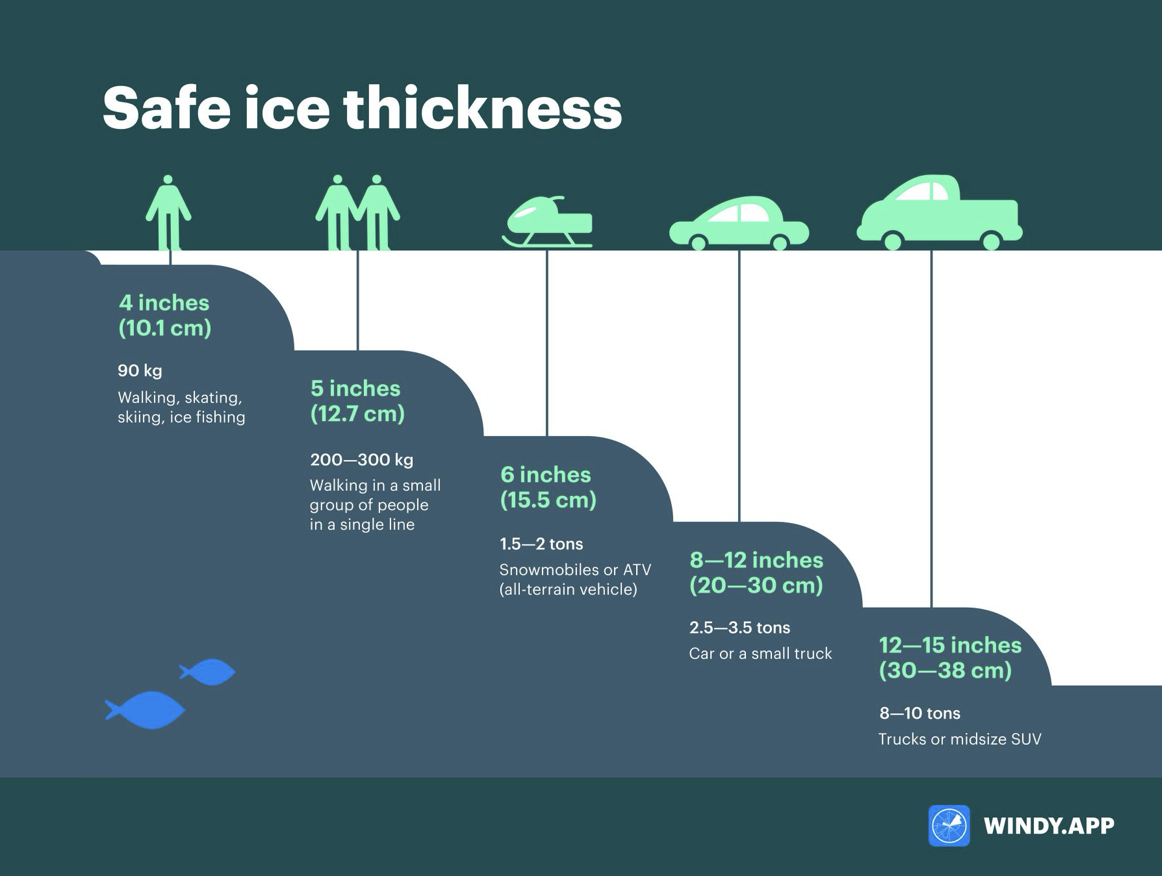
While it has been cold enough for ice to form (until the rain came), it hasn’t been cold long enough for the ice to thicken. You can ice fish when the ice is at least 4 inches thick. Ice 5 to 6 inches thick will support snowmobiles and ATVs, 8 to 12 inches of ice will hold cars and small trucks. And the ice needs to be 12 to 15 inches thick to support medium-sized trucks.
Currents can create holes in the ice and can make ice thickness unpredictable. Because of these factors, ice can never be considered completely safe.
"Always consider ice to be potentially dangerous," MassWildlife said. "You can't judge ice conditions by appearance or thickness alone; many other factors like water depth, size of waterbody, water chemistry, currents, snow cover, age of ice, and local weather conditions impact ice strength."
If you fall through the ice, you should:
Call for help: Yell for help and try to get someone's attention.
Float: Use the air trapped in your clothes to float on your stomach.
Get back on the ice: Reach forward onto the ice without pushing down, then kick your legs and push your torso onto the ice.
Crawl or roll: Once you're back on the ice, crawl on your stomach or roll away from the open water.
Spread your arms and legs out to distribute your weight.
Head for shore: Look for shore and make sure you're heading in the right direction.
Stay calm: Don't let the shock of falling into the water overwhelm you.
Use your winter clothes: Keep your winter clothes on to help you float.
If you're trying to save someone who has fallen through the ice, you can:
Call 911 immediately.
Throw the person something to help them pull themselves out, like a rope or long branch.
Encourage them to kick while you pull them out.
Here is a great link to detailed instructions. Reviewing them each year, could save your life.